
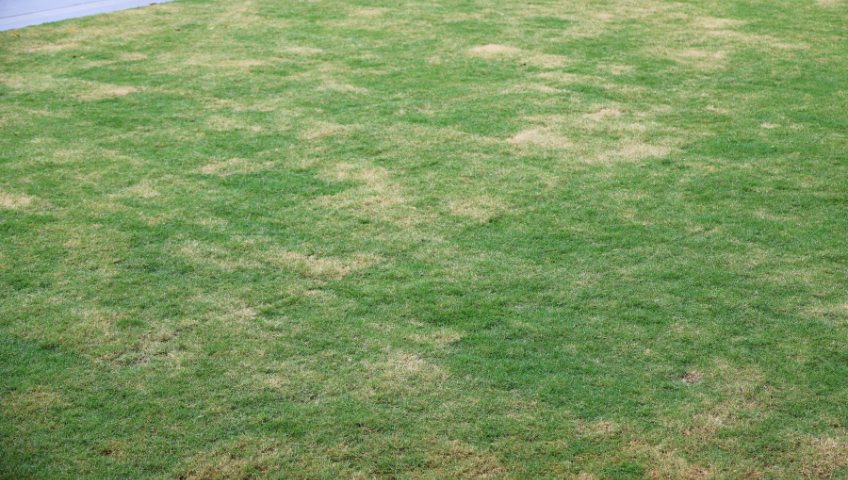
If your lawn looks like it lost a fight this summer, you’re not imagining it. Between the heat stress and the stretches without rain, a lot of St. Louis yards are heading into Autumn thinner, patchier, and browner than they should be. The good news: this is exactly the window to fix it. The confusing part is knowing which fix actually applies to your yard.
Why Your Turf Took a Hit This Summer
Extended heat stress doesn’t just make grass look tired, but it shuts down growth entirely. Cool-season grasses like the fescue and bluegrass, common in St. Louis lawns, go semi-dormant once temperatures sit in the 90s for days at a time. Add in inconsistent irrigation, and thin spots turn into bare patches fast. That damage doesn’t reverse itself once the weather cools. It needs a plan.
Aerating and Overseeding: The Recovery Combo
Now is the best window all year for cool-season lawns to bounce back, and aerating and overseeding together is how you make that happen. Aeration loosens up soil that’s been packed down all summer by foot traffic, mowing, and heat. That gives water, air, and nutrients a clear path back to the roots. Overseeding right after fills in the bare and thinning areas while the soil is still loosened and the fall temperatures give new seed the best shot at establishing before winter.
They work as a pair. Aerate without seeding and the bare spots don’t fill in. Seed without aerating and most of it never makes contact with the soil.
Adjust Irrigation as the Weather Shifts
The watering schedule that got your lawn through July isn’t the one it needs in this cooler weather. As temperatures drop and days shorten, grass requires deeper watering that’s less frequent. This encourages strong root growth rather than shallow, heat-stressed roots. New seed needs a different approach: light, frequent watering to germinate, not the deep soaks established turf gets. Getting this wrong is one of the most common reasons fall seeding underperforms.
Power Raking vs. Aeration vs. Dethatching: Clearing Up the Confusion
First, what’s thatch? It’s the layer of dead grass stems, roots, and shoots that builds up between the green grass and the soil. A thin layer, under half an inch, is normal and even healthy. But once it gets thicker than that, it begins blocking water, air, and fertilizer from reaching the roots. And suddenly it becomes a breeding ground for those nasty pests and disease.
That’s where these three services come in. And note that they’re not interchangeable:
- Aeration relieves soil compaction by pulling cores out of the ground. It works below the surface, at the root zone.
- Dethatching uses flexible tines to gently lift light, topical debris off the surface — a mild touch-up for a thin layer of thatch.
- Power raking turns it up a notch. It uses rigid blades to rip out thick thatch buildup (over half an inch) while staying purely on the surface.
The short version: aeration treats the soil, dethatching and power raking treat what’s sitting on top of it. Most St. Louis lawns need aeration every fall. Power raking is only necessary when thatch has built up to a real problem, not as a routine step.
The Bottom Line
If your lawn lost ground this summer, you can still win it back! As long as aeration, overseeding, and your watering schedule are all working together. Plus you must use the right tool for what your lawn actually has going on. A wrong guess here isn’t cheap — you end up paying for a service you didn’t need, or the right one on the wrong timeline.
Not sure whether your lawn needs aeration, dethatching, or a power rake this fall? We’ll take a look and tell you straight. Your lawn isn’t a guessing game. Bring in the professionals and contact Horstmann Brothers to schedule an assessment.